This is the second in a series of brief posts about facts I find interesting and/or surprising. The intent is to keep these posts brief but to provide links to detailed references for those interested in researching the topic further.
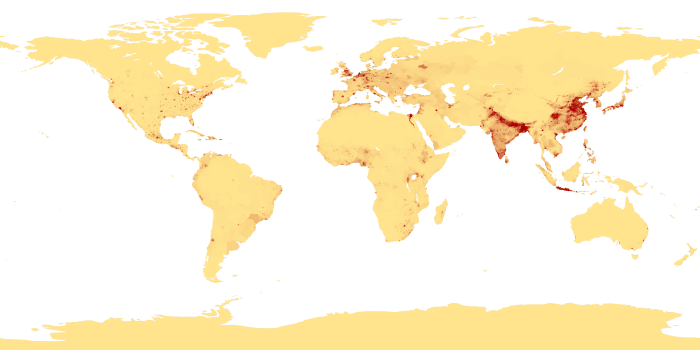
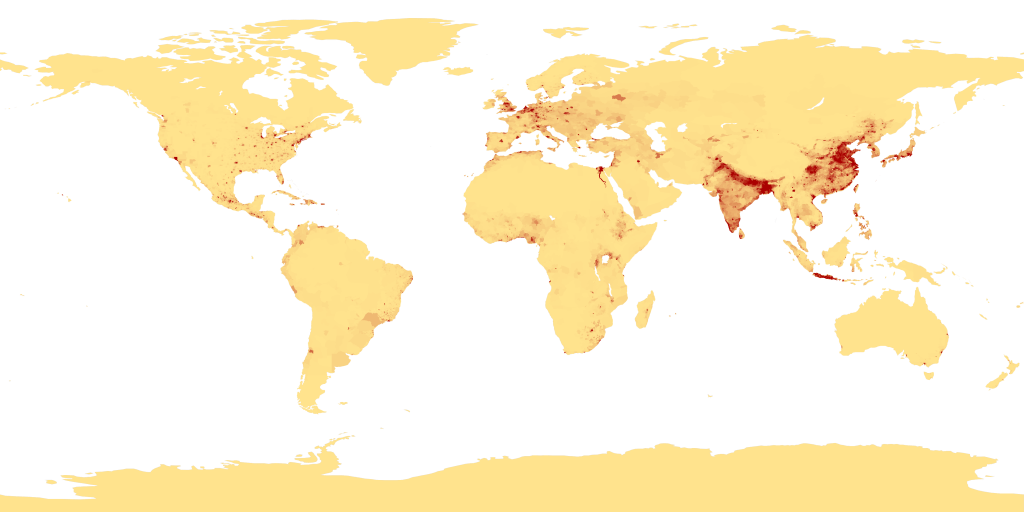
The human population of earth is roughly 7.0 billion and is growing at 1% annually; that is, we’re adding roughly 70 million people annually.
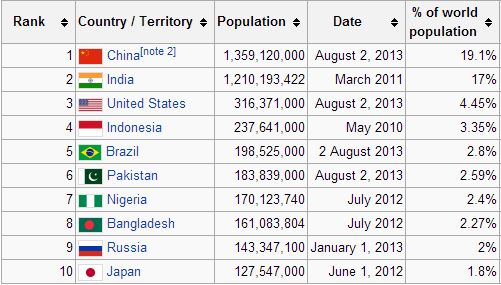
China, at 1.35 billion people, is almost 20% of the world’s population followed closely by India at 1.21 billion people (17%). That means that an unbelievable 37 out of every 100 humans on the planet are either Chinese or Indian. At 313 million people, the United States is the 3rd most populous country in the world with 4.4% of the world’s people.
It might surprise most that, as is discussed in an earlier post, the world’s population is expected to peak in the coming few decades and then begin declining. The following Wikipedia table shows the top 10 most populous countries in the world (my birth country of Egypt is 15th at 85 million people, and thus not shown on the list):
The first post in this series was Did You Know: We Know The Age of the Universe.








 Against the Herd
Leave a reply to Bassam Salem Cancel reply